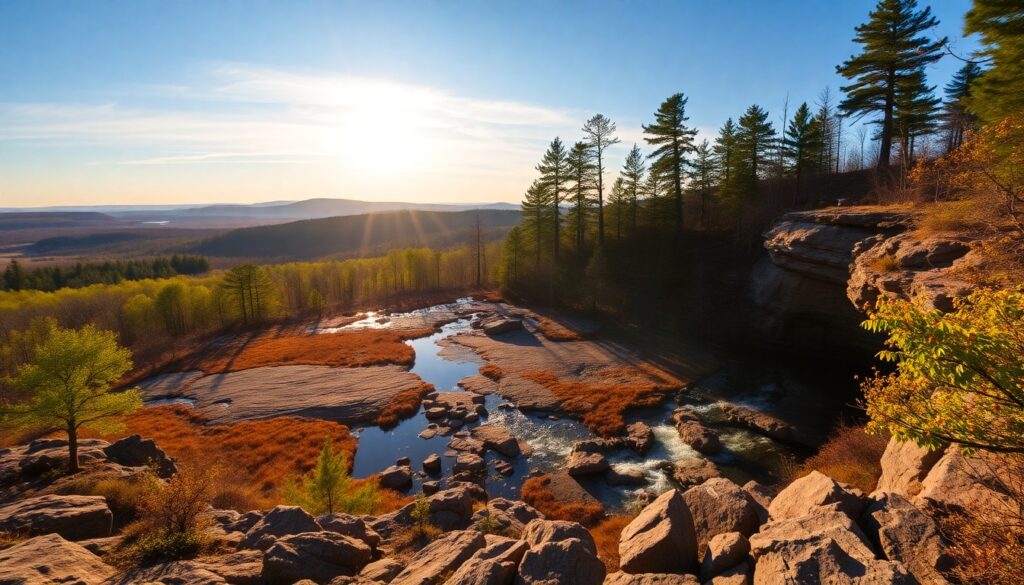
Sunlight glints off the calm, dark waters, reflecting the verdant canopy of silver maples that line the banks as a great blue heron stands sentinel, perfectly still. This is the serene welcome of the Great Meadows Wildlife Trail, a haven where the rhythm of nature takes precedence. As you step onto the path, the soft rustle of reeds and the distant call of a red-winged blackbird immediately transport you from the everyday, inviting you into a world teeming with life along the Sudbury River floodplain. Here, every bend in the trail offers a new tableau, a fresh opportunity to connect with the wild heart of New England.
Trail Specifications
Trail Name: Great Meadows Wildlife Trail
Location: Concord, MA
Distance: Approximately 2.8 miles (main loop)
Elevation Gain: Minimal (approx. 15 feet)
Difficulty: Easy
GPS Coordinates: 42.4729° N, 71.3789° W (Main Parking)
Best Season: Year-round, each season offers unique experiences
Dog-Friendly: No (Service animals only, due to wildlife protection)
Route Overview & Natural Highlights
The Great Meadows Wildlife Trail offers an immersive experience into a vital freshwater wetland ecosystem. The terrain is notably flat and accessible, primarily composed of wide, packed-earth paths and extensive boardwalks that gracefully traverse the marshlands. You’ll find yourself walking alongside the slow-moving Sudbury River, a significant tributary that shapes the refuge’s hydrology and ecology. This refuge is part of the U.S. Fish & Wildlife Service’s system, managed specifically to provide habitat for migratory birds and other wetland-dependent species, making it a premier birdwatching destination in eastern Massachusetts.
As you explore, observe the rich diversity of plant life. In the open marsh, you’ll encounter dense stands of cattails and common reed, interspersed with flowering aquatic plants like pickerelweed and arrow-arum during warmer months. The forested edges are dominated by water-tolerant trees such as silver maple and red maple, along with shrubs like buttonbush. Wildlife sightings are frequent and rewarding. Keep your binoculars ready for great blue herons, snowy egrets, and a variety of ducks including mallards and wood ducks. You might spot an osprey circling overhead or a red-tailed hawk perched in a distant tree. On the water, look for painted turtles sunning themselves and the V-shaped wake of muskrats or even a beaver. Listen for the chorus of green frogs and spring peepers in spring.
Geologically, the refuge sits on alluvial soils deposited by the Sudbury River over millennia, creating a nutrient-rich floodplain ideal for wetland vegetation. The expansive views over the open marsh, particularly from the observation decks, provide a sense of vastness and tranquility rarely found so close to urban areas. The scenic payoffs here are not dramatic mountain vistas, but rather the intimate details of nature: the iridescent sheen on a duck’s feather, the delicate dance of dragonflies, and the subtle shifts in light across the water. It’s a place designed for quiet observation and appreciation of the natural world, a stark contrast to the nearby historical significance of sites like Minute Man National Historical Park.
Turn-by-Turn Trail Breakdown
Trailhead Start: Your journey begins at the main parking area off Weir Hill Road. Follow the clear signage to the visitor kiosk, where you can orient yourself with a map. The initial section of the trail is a wide, flat path, often shaded by mature trees. You’ll quickly reach the first of several boardwalk sections, which guide you smoothly over wetter areas, providing immediate access to the heart of the marsh. This early segment offers excellent opportunities for birdwatching along the water’s edge.
Mid-Trail Features: As you progress, the trail forms a roughly horseshoe-shaped loop, with various spurs extending to observation platforms. These platforms are strategic points designed for wildlife viewing, often equipped with benches. You’ll traverse diverse habitats, moving from open marshland dominated by reeds and cattails to sections bordering dense shrub swamp and even pockets of floodplain forest. Pay close attention to the water and the skies here; this is where you’re most likely to spot waterfowl, wading birds, and raptors. The tranquility of these sections, punctuated only by the sounds of nature, is a profound experience.
Destination & Return: The main loop does not lead to a singular “summit” but rather offers a continuous circuit through the refuge. As you reach the furthest points of the loop, you’ll be rewarded with panoramic views across the expansive wetlands, often stretching to the tree line on the opposite side of the river. The return journey allows you to experience the landscape from a different perspective, perhaps catching new light on familiar scenes or spotting wildlife you missed on the way out. The trail circles back to the initial starting point, providing a fulfilling and accessible outdoor experience.
Seasonal Guide & Best Times
- Spring (March – May): Witness the spectacular return of migratory birds, including various waterfowl and songbirds. The wetlands burst with new green growth, and amphibians like frogs and salamanders become active. Early spring can be muddy; late spring offers pleasant temperatures and abundant bird song.
- Summer (June – August): The refuge is lush and green, with vibrant aquatic plants in bloom. Dragonflies dart over the water, and turtles bask in the sun. Early mornings or late afternoons are best to avoid heat and observe active wildlife. Insect repellent is highly recommended.
- Autumn (September – November): Enjoy cooler temperatures and the subtle beauty of fall foliage along the forested edges. This is a prime time for raptor migration and the gathering of waterfowl before their southern journey. The air is crisp, and views are often clear.
- Winter (December – February): Experience a serene, quiet landscape. The frozen marshlands offer a stark beauty, and tracking snow can reveal the presence of resident mammals. Hardy waterfowl often remain, and the absence of foliage makes bird spotting easier. Dress warmly for cold temperatures.
Essential Gear & Safety
- Footwear: Comfortable walking shoes are sufficient, but waterproof boots are advised, especially after rain or in early spring, due to potential mud on some sections.
- Water & Snacks: Carry enough water to stay hydrated, especially on warmer days. A light snack can be enjoyable during a quiet moment of observation.
- Binoculars & Field Guide: These are indispensable for maximizing your wildlife viewing experience. A local bird guide or app for New England will enhance your understanding.
- Insect Repellent: Particularly important from late spring through early autumn, as mosquitoes and ticks can be present.
- Sun Protection: Sections of the trail are exposed, so bring a hat, sunglasses, and sunscreen.
- AllTrails Link: For more detailed maps and recent trail conditions, consult the Great Meadows National Wildlife Refuge on AllTrails.
Getting There & Parking
The Great Meadows Wildlife Trail is located within the Great Meadows National Wildlife Refuge in Concord, MA. The main entrance and parking lot are situated at 701-703 Weir Hill Road, Concord, MA 01742. From Boston, take Route 2 West to Route 62 West (Main Street) towards Concord Center, then follow local signs to Weir Hill Road. The refuge is easily accessible and offers a large, free parking area. The refuge is open from dawn to dusk daily, allowing ample time for exploration. While you’re in the area, consider a visit to nearby Concord Center, a charming historic town offering dining and cultural sites.
Curated Literature & Boston Downtown Calendar
The Architecture of Focus: Deep Work & Modern Mastery
By Founders Library Press
A structured framework for strategic clarity, productivity, and authentic execution.
Upcoming Downtown Happenings
Live acoustic sessions, gallery receptions, literary salons, and independent trade shows across Boston.