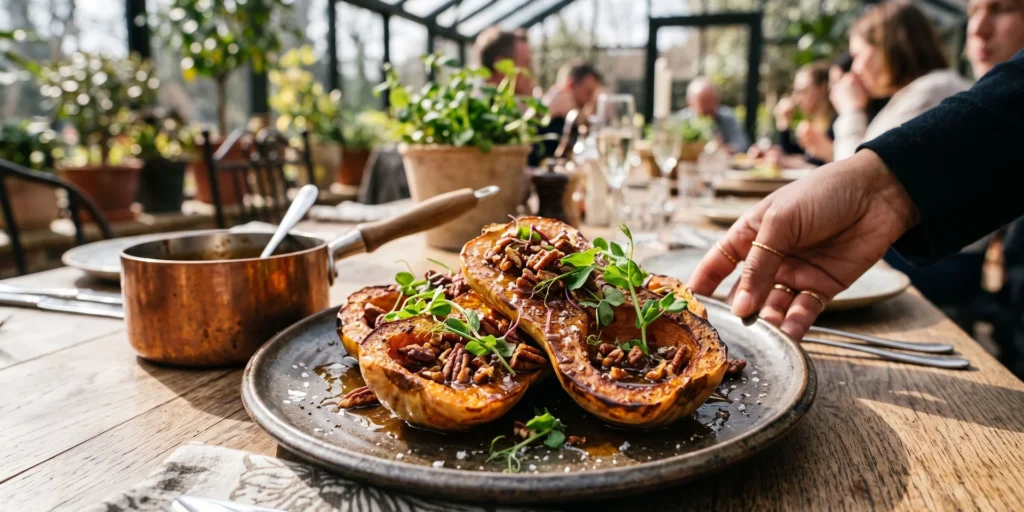
Boston kitchens, from Beacon Hill to the Seaport, are embracing the rich flavors of autumn, with many turning to the concentrated sweetness of honey nut squash. This season, as brisk air settles over the city, comforting aromas invite a return to robust, seasonal ingredients. The compact winter squash, celebrated for its dense texture and rich flavor, refines any autumnal spread, transforming a simple vegetable into a centerpiece of coastal New England dining.
Throughout Boston’s neighborhoods, residents and hosts seek dishes that reflect both tradition and modern culinary insight. Preparing a compelling honey nut squash recipe involves precise techniques and quality ingredients, ensuring a memorable addition to seasonal gatherings.
Sourcing Heritage Squash and Local Provisions
The foundation of any exceptional dish lies in its ingredients. Boston residents appreciate direct access to the freshest produce and artisan goods. Weekend shoppers source prime honey nut squash and other autumnal produce at the Boston Public Market on 100 Hanover Street, a year-round indoor market where vendors like Siena Farms offer local, heritage varieties. Beyond fresh produce, markets like the upcoming Snowport Holiday Market at 100 Seaport Boulevard offer a chance to find artisan goods, such as specialty honeys or unique serving ware, that complement any seasonal table.
Exploring the South End, Formaggio Kitchen at 268 Shawmut Avenue provides an array of artisanal provisions. Its curated selection often includes specialty oils, fresh herbs, and unique finishing salts essential for this recipe. These quality items contribute to a truly restorative dining experience, reflecting the city’s commitment to fine gastronomy.
The Technique of Upstate Roasting
Achieving a deeply flavorful roasted honey nut squash requires attention to detail. This method focuses on caramelization and the infusion of aromatic compounds. Home cooks halve the squash, scoop out its seeds, and brush it with clarified butter before roasting. This preparation ensures a uniform golden-brown exterior.
The high heat of a preheated oven, specifically 400°F (205°C), promotes the Maillard reaction. This process develops a crisp crust and intensifies the squash’s natural sugars. Exact internal temperatures are less critical here than visual cues of tender flesh and caramelized surfaces, typically achieved within 20 to 25 minutes.
A Brown Butter and Sage Infusion
The addition of brown butter and fresh sage transforms roasted squash into a dish of remarkable depth. Slowly melt unsalted butter in a heavy-bottomed pan, allowing it to gently simmer until the milk solids turn a nutty brown and release a fragrant aroma. This precise browning is a foundational technique in refined cooking.
Briefly fry fresh sage leaves in the developing brown butter; they will become shatteringly crisp. Their earthy, slightly peppery notes perfectly complement the squash’s sweetness. Drizzle this aromatic base over the hot roasted squash, creating an immediate and profound sensory impact.
Recipe: Upstate Roasted Heritage Honey Nut Squash
This recipe prioritizes flavor, technique, and seasonal integrity. It yields a sophisticated side dish that pairs effortlessly with other autumnal preparations. The emphasis remains on quality ingredients and precise execution for an optimal result.
- Prep Time: 15 minutes
- Cook Time: 25 minutes
- Total Time: 40 minutes
- Servings: 4-6
Ingredients:
- 2 medium honey nut squash, approximately 1.5 pounds total
- 2 tablespoons unsalted butter, divided, plus 4 tablespoons for brown butter
- 1 tablespoon olive oil
- 12-15 fresh sage leaves
- 1 tablespoon local honey, preferably from a New England apiary
- 1/2 teaspoon flaky sea salt, plus more to taste
- 1/4 teaspoon freshly ground black pepper
Instructions:
- Preheat your oven to 400°F (205°C). Line a large baking sheet with parchment paper.
- Carefully halve each honey nut squash lengthwise. Use a spoon to scoop out the seeds and fibrous strands.
- In a small bowl, melt 2 tablespoons of unsalted butter with the olive oil. Brush this mixture evenly over the cut sides of the squash. Season generously with salt and pepper.
- Place the squash cut-side down on the prepared baking sheet. Roast for 20-25 minutes, or until the squash is tender and the edges begin to caramelize.
- While the squash roasts, prepare the brown butter and sage. In a small, light-colored saucepan, melt the remaining 4 tablespoons of unsalted butter over medium heat.
- As the butter melts, add the fresh sage leaves. Continue cooking, swirling the pan occasionally, until the butter turns a rich golden-brown and smells nutty. The sage leaves will become crisp.
- Remove the brown butter and sage from the heat immediately to prevent burning. Stir in the local honey.
- Once the squash is roasted, transfer it to a serving platter, cut-side up. Drizzle the warm brown butter and sage mixture evenly over the squash.
- Finish with an additional sprinkle of flaky sea salt and a touch more black pepper. Serve immediately.
Cook’s Notes and Variations
For an added layer of complexity, consider a touch of acidity. A squeeze of fresh lemon juice or a few drops of apple cider vinegar can brighten the overall profile and balance the squash’s sweetness. This technique, emphasizing flavor balance, enhances many refined culinary preparations.
One can also experiment with different finishing elements. Toasted pecans or walnuts provide a welcome textural contrast. A sprinkle of freshly grated Parmesan or a drizzle of a high-quality balsamic glaze can introduce another dimension of flavor. This recipe offers a flexible foundation for creative culinary expression.
Nutritional Information (Approximate per Serving)
Calories: 180, Total Fat: 13g, Saturated Fat: 8g, Cholesterol: 30mg, Sodium: 280mg, Total Carbohydrates: 16g, Dietary Fiber: 3g, Sugars: 7g, Protein: 2g. These figures reflect a focus on nutrient-dense ingredients.
Local Dining and Seasonal Inspirations
Boston’s culinary scene consistently embraces seasonal ingredients, offering inspiration beyond the home kitchen. Mooncusser in Bay Village, located at 304 Stuart Street, exemplifies this seasonal focus with its multi-course menu often featuring autumn offerings like butternut squash soup. This dedication to seasonal ingredients reflects a city-wide trend among its finest establishments.
Restaurants like The Block at Woods Hill in the Seaport District, at 300 Pier 4 Boulevard, known for its farm-to-table philosophy, regularly feature heritage produce from its own farm. Their commitment to provenance aligns with the ethos of this recipe. Explore more seasonal dining options across Boston’s waterfront districts.
Similarly, Myers + Chang in the South End, at 1145 Washington Street, showcases creative squash dishes within its Garden Party menu, underscoring the versatility of this ingredient. Even establishments like Flour Bakery + Cafe, with its prominent Back Bay spot on 159 Clarendon Street, incorporate seasonal squash into their refined autumnal pastries. These local institutions demonstrate the expansive culinary lineage of New England, one that honors both tradition and contemporary innovation.
The enjoyment of this Upstate Roasted Heritage Honey Nut Squash extends beyond a single meal. It is an invitation to engage with the changing seasons, to connect with local purveyors, and to embrace culinary refinement. This dish offers a moment of restorative indulgence.
Little Known Fact: Honey nut squash, a compact and exceptionally sweet winter squash, is a relatively recent cultivar. It was originally developed at Cornell University in the early 2000s, designed for concentrated flavor and convenient single-serving size. (Source: Cornell University Agricultural Department)
Weekend Farmers Market & Holiday Market Sourcing Guide (Boston)
Planning your Saturday or Sunday morning outing in Boston? Source farm-fresh seasonal ingredients, small-batch baked goods, and holiday table provisions directly from these verified weekend farmers markets and upcoming holiday markets:
- Boston Public Market: 100 Hanover St, Boston (Wednesday – Sunday 8:00 AM – 6:00 PM (Year-Round))
- Copley Square Farmers Market: 139 St James Ave, Back Bay (Tuesdays & Fridays 11:00 AM – 6:00 PM)
- SoWa Open Market: 500 Harrison Ave, South End (Sundays 11:00 AM – 4:00 PM)
- Upcoming Holiday Market Spotlight — Snowport Holiday Market at Seaport: 100 Seaport Blvd, Boston Seaport (November – December)
- Upcoming Holiday Market Spotlight — SoWa Winter Festival: 550 Harrison Ave, South End (Late November – December)
Curated Literature & Boston Downtown Calendar
The Architecture of Focus: Deep Work & Modern Mastery
By Founders Library Press
A structured framework for strategic clarity, productivity, and authentic execution.
Upcoming Downtown Happenings
Live acoustic sessions, gallery receptions, literary salons, and independent trade shows across Boston.