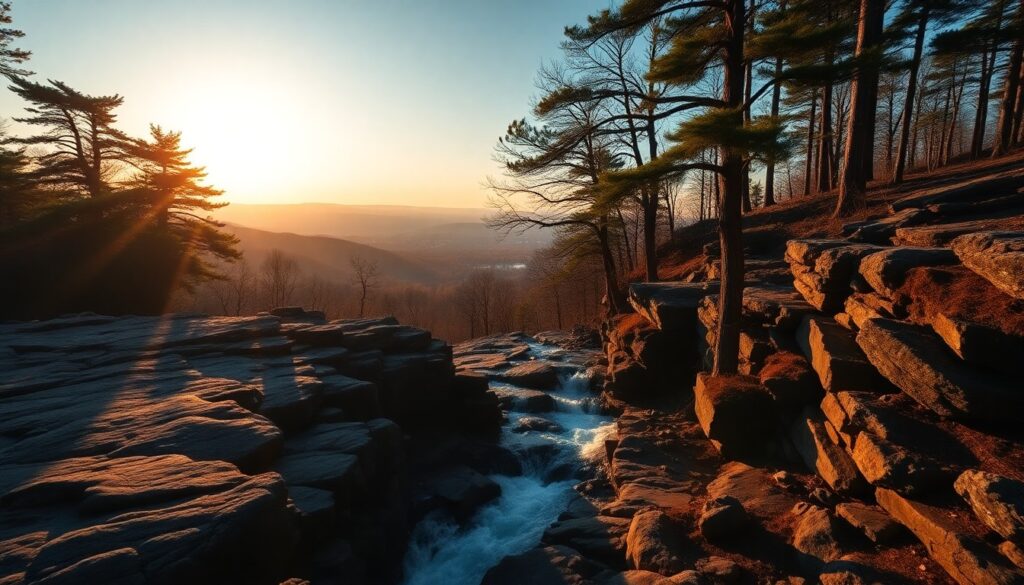
As the invigorating scent of pine and damp earth fills the air, you begin your ascent toward the summit of Blue Hills Great Blue Hill. From its rocky pinnacle, the panoramic vista unfolds dramatically, revealing the sprawling Boston skyline, the shimmering expanse of Boston Harbor, and the distant, intricate lacework of the surrounding suburbs. This iconic landmark, a jewel within the Blue Hills Reservation, offers a profound connection to nature just a stone’s throw from the city’s pulse, promising a rewarding journey for every step you take.
Trail Specifications
Trail Name: Great Blue Hill Summit Loop (via Red Dot & Skyline Trails)
Location: Milton, MA (Blue Hills Reservation)
Distance: Approximately 2.5 – 3 miles (loop)
Elevation Gain: Approximately 350-400 feet
Difficulty: Moderate
GPS Coordinates (Trailhead near Trailside Museum): 42.2045° N, 71.1065° W
Best Season: Year-round, particularly beautiful in autumn and clear winter days
Dog-Friendly: Yes, on leash
Route Overview & Natural Highlights
The journey up Great Blue Hill immerses you in a rich, ancient landscape. The terrain shifts from relatively smooth forest paths to rugged, rock-strewn ascents, characteristic of the Blue Hills. You’ll navigate over gnarled tree roots and glacial erratics—boulders left behind by retreating ice sheets—that speak to the region’s geological past. The forest canopy overhead is a diverse mix of deciduous and coniferous trees, including towering red oaks, sugar maples, white pines, and eastern hemlocks. In the understory, you might spot resilient ferns, patches of moss, and low-growing blueberry bushes, offering a glimpse into the local ecology.
Geologically, Great Blue Hill is a fascinating remnant of ancient volcanic activity, primarily composed of rhyolite and granite from the Milton Formation. As you climb, observe the exposed rock faces, testament to millions of years of geological forces and erosion. Keep an eye out for local wildlife; white-tailed deer are common, along with various songbirds, squirrels, and chipmunks. Overhead, red-tailed hawks often circle, riding the thermals, their keen eyes surveying the expansive territory. The reward for your efforts is the breathtaking 360-degree panorama from the summit, a truly memorable scenic payoff.
Turn-by-Turn Trail Breakdown
Trailhead Start (Near Trailside Museum)
Begin your adventure from the parking lot adjacent to the Trailside Museum. You’ll pick up the well-marked Red Dot Trail, which immediately begins a gradual, consistent climb. The path here is mostly wide, packed earth, but quickly introduces you to the trail’s character with exposed roots and small rocks. The forest envelops you almost immediately, providing a sense of escape from the nearby urban sprawl.
Mid-Trail Features (Red Dot to Skyline Trail)
As you continue your ascent on the Red Dot Trail, the incline becomes steeper in sections, requiring more deliberate foot placement. You’ll encounter larger rock outcrops and potentially some muddy patches after rain. About halfway up, you’ll intersect with the Skyline Trail. Taking a left here will guide you further towards the summit. This section offers intermittent views through the trees, hinting at the grandeur to come. The air often feels cooler here, especially as you gain elevation, and the sounds of the forest become more pronounced.
Summit & Return (Eliot Tower and Blue Hill Observatory)
The final push to the summit is the most rewarding. You’ll reach the iconic Eliot Tower, a stone observation tower that offers even higher vantage points. Adjacent to the tower stands the historic Blue Hill Observatory, the oldest continuously operating weather observatory in North America, a significant semantic entity for the region. Take your time to absorb the incredible views stretching from the Boston skyline to the south shore and beyond. For your descent, you can retrace your steps or opt for a slightly different path like the Blue Dot Trail to create a full loop back to the Trailside Museum, offering varied scenery on your return.
Seasonal Guide & Best Times
- Spring (April – May): The forest awakens with budding leaves and wildflowers like trillium and bloodroot. Cooler temperatures make for comfortable hiking, and fewer crowds mean a more tranquil experience.
- Summer (June – August): The lush green canopy provides ample shade. Early mornings or late afternoons are ideal to avoid peak heat and humidity. The views from the summit are often hazy but still captivating.
- Autumn (September – November): This is arguably the most spectacular season. The Blue Hills transform into a vibrant palette of reds, oranges, and golds. Crisp air and clear skies offer unparalleled visibility from the summit, but expect larger crowds.
- Winter (December – March): A stark beauty defines the winter landscape. With leaves gone, distant views are often clearest and most expansive. Microspikes or traction devices may be necessary on icy patches, especially after winter storms.
Essential Gear & Safety
- Sturdy Hiking Boots: The rocky and rooted terrain demands good ankle support and traction.
- Water & Snacks: Even a moderate hike requires hydration and energy, especially on warmer days.
- Layered Clothing: Weather can change quickly, so dress in layers to adapt to temperature shifts.
- Navigation: While well-marked, carrying a map or using a reliable app like AllTrails is always recommended.
- First-Aid Kit: For minor scrapes or blisters, it’s always wise to be prepared.
Getting There & Parking
The most common access point for the Great Blue Hill summit trails is the parking lot located at the Trailside Museum, part of the Blue Hills Reservation. You can find it at 1904 Canton Ave, Milton, MA. Parking here is typically free and offers ample space, though it can fill up quickly on pleasant weekend mornings, especially during peak foliage season. The Blue Hills Reservation is generally open from dawn to dusk, and it’s always wise to plan your hike to ensure you’re off the trails before dark. Consult the DCR website for any specific alerts or seasonal changes in operating hours.
Curated Literature & Boston Downtown Calendar
The Architecture of Focus: Deep Work & Modern Mastery
By Founders Library Press
A structured framework for strategic clarity, productivity, and authentic execution.
Upcoming Downtown Happenings
Live acoustic sessions, gallery receptions, literary salons, and independent trade shows across Boston.